
PRODUCTS OVERVIEW
Nurse Call System Devices That Fit Your Community
Nurse call buttons, pendants, radar sensors and voice devices for Direct Care Connect DCC™, including the Communication Hub, exclusive to Poltys Canada.
DCC HARDWARE
Browse nurse call system devices by system
Start with the system that fits your building, wireless or wired, then add the pendants, call cords, sensors and voice devices that work with either.
Exclusive to Poltys Canada
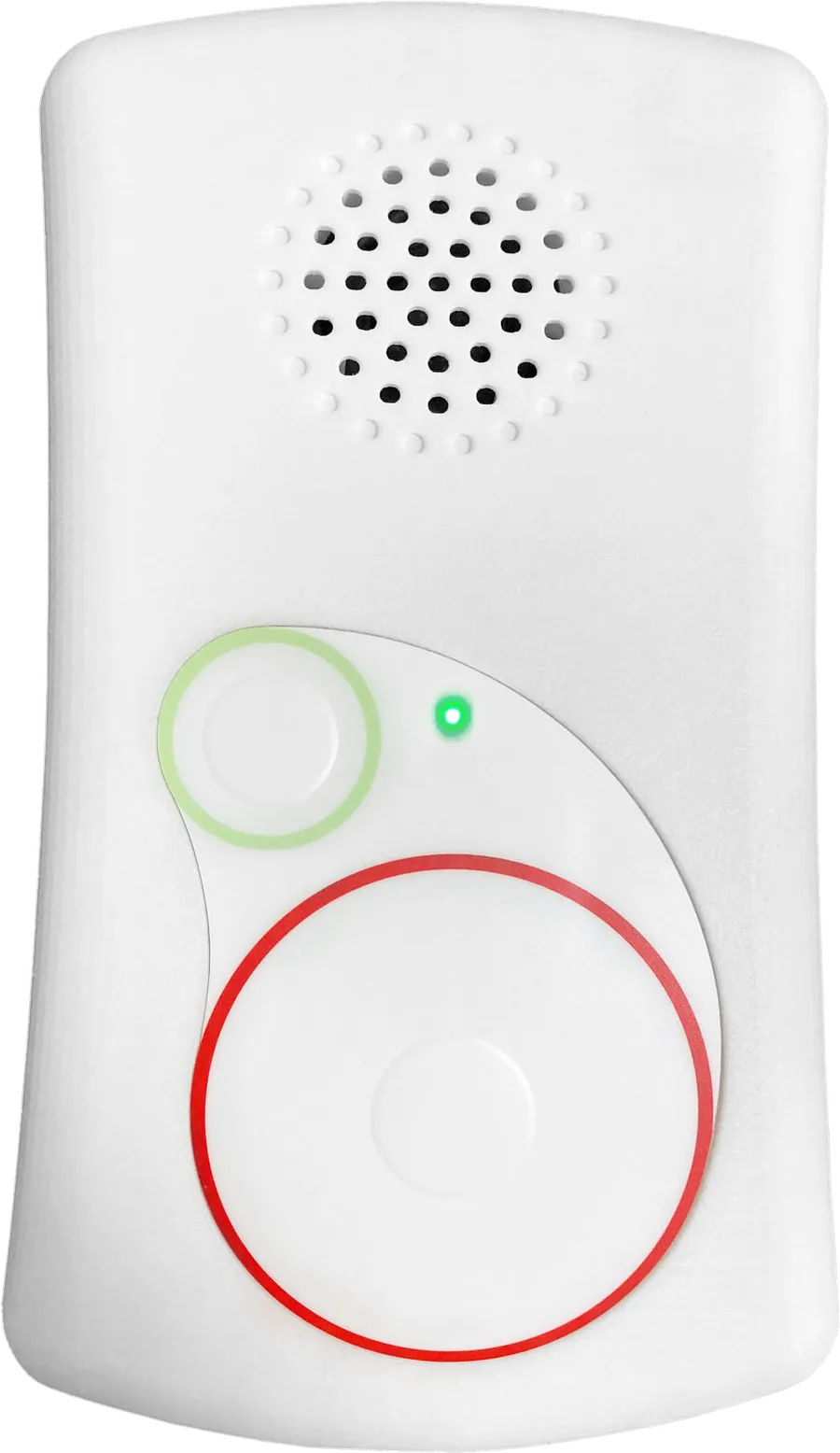
Communication Hub Station
Designed and assembled in Canada
One call point, two ways to answer. The Communication Hub sends the alarm and opens the conversation, so staff know whether they are walking to a spill or a fall before they leave the station.
- Two-way voiceAn auto-answer speakerphone lets staff talk with the resident before walking the hall.
- Five alarm inputsTwo call cord jacks plus three auxiliary inputs for bed, chair, door and smoke sensors.
- PoE or DC poweredOne network cable carries power, voice and alarms, or run it from a DC adapter.
- Alarms never ride Wi-FiAlarms use the wired network or supervised 900 MHz wireless. Wi-Fi carries voice only.
- Your call typesConfigurable buttons for staff assist, check-in, housekeeping and other workflows.
- Call light readyDrives a corridor dome light, expandable to three colours.
WIRELESS SYSTEM
Wireless system
Our most complete range. Stations run on supervised 900 MHz wireless, so rooms are covered with little or no new cabling.
Room stations
The main call point in a resident room. Each takes call cords, and a pull cord covers the washroom.
Communication Hub Station
Two-way voice call point with two call cord jacks and three auxiliary inputs. Alarms travel over supervised 900 MHz wireless, never Wi-Fi. Designed and assembled in Canada.
See the Communication Hub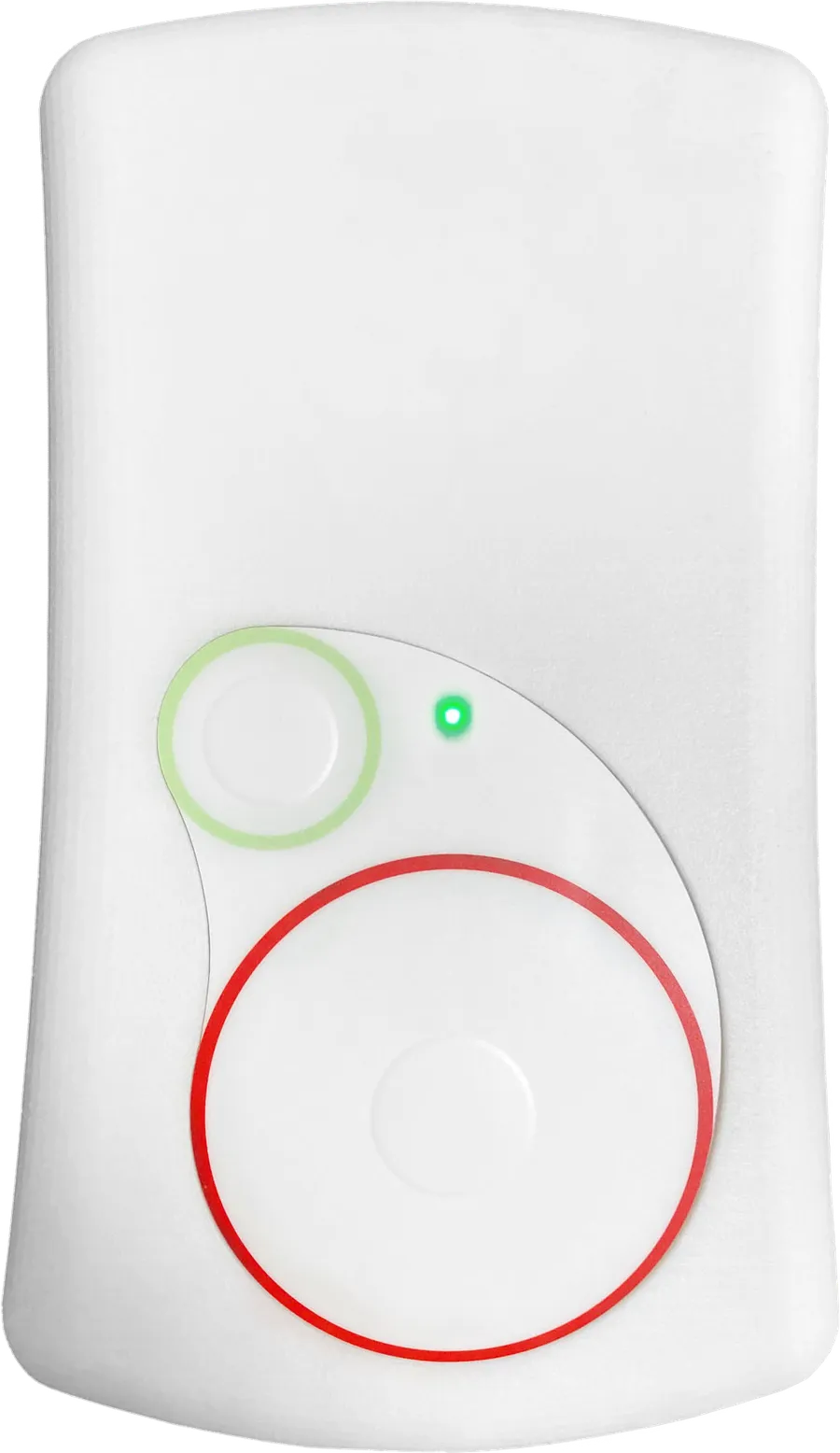
Hub Station
The Communication Hub’s inputs without the voice: two call cord jacks and three auxiliary inputs for bed, chair, door and smoke sensors, on battery power. Designed and assembled in Canada.
Multicall Station 4
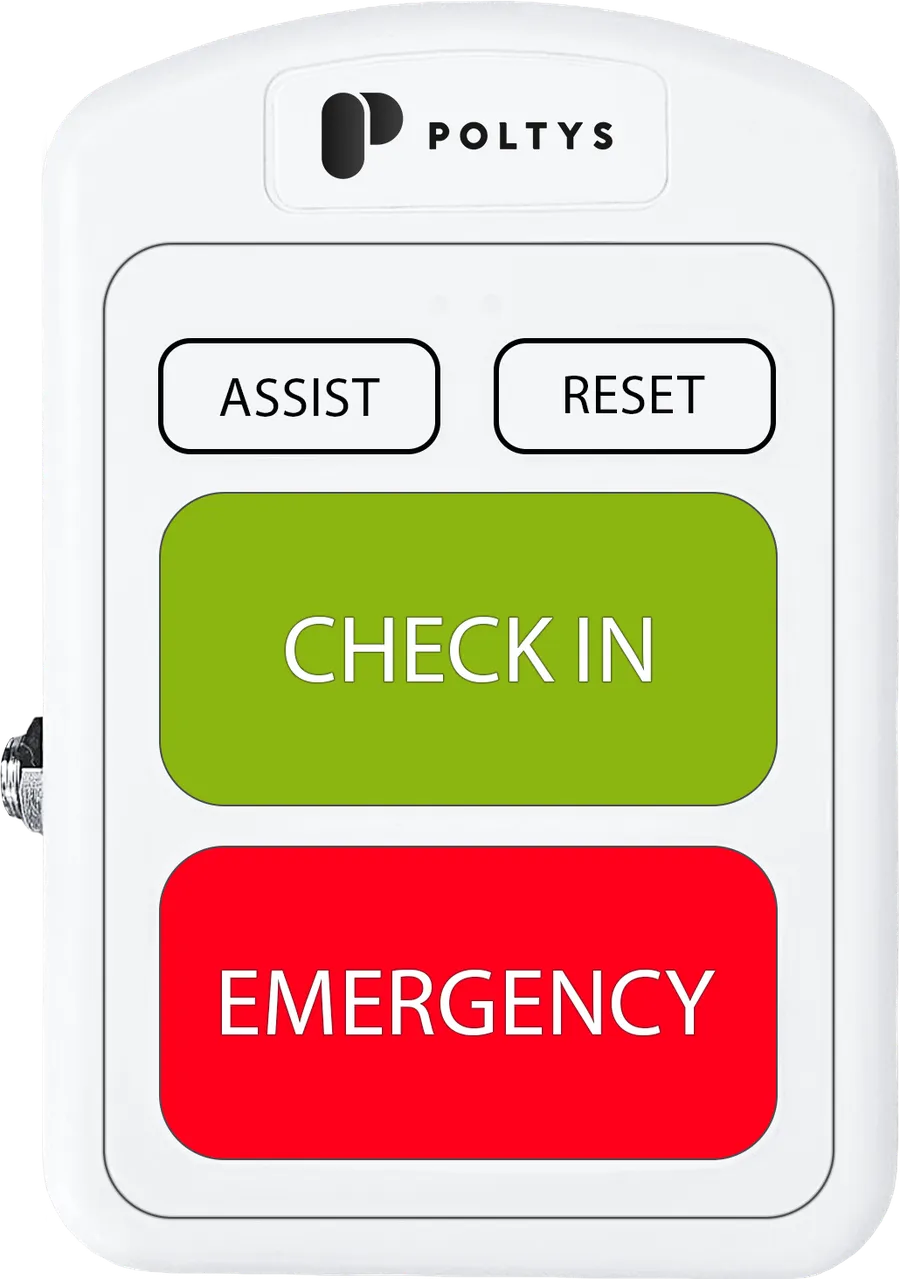
Battery-powered wireless call point with emergency, staff assist and resident check-in buttons, a removable pull cord and a call cord jack.
Multicall Station 5
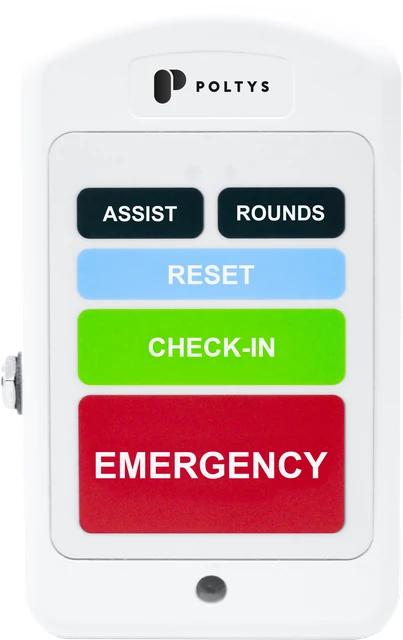
Everything on the Multicall Station 4, plus a staff rounds button: emergency, staff assist, resident check-in and staff rounds, with a removable pull cord and a call cord jack.
Call points
Single-purpose stations for the bedside, the washroom, the lounge and the daily check-in.
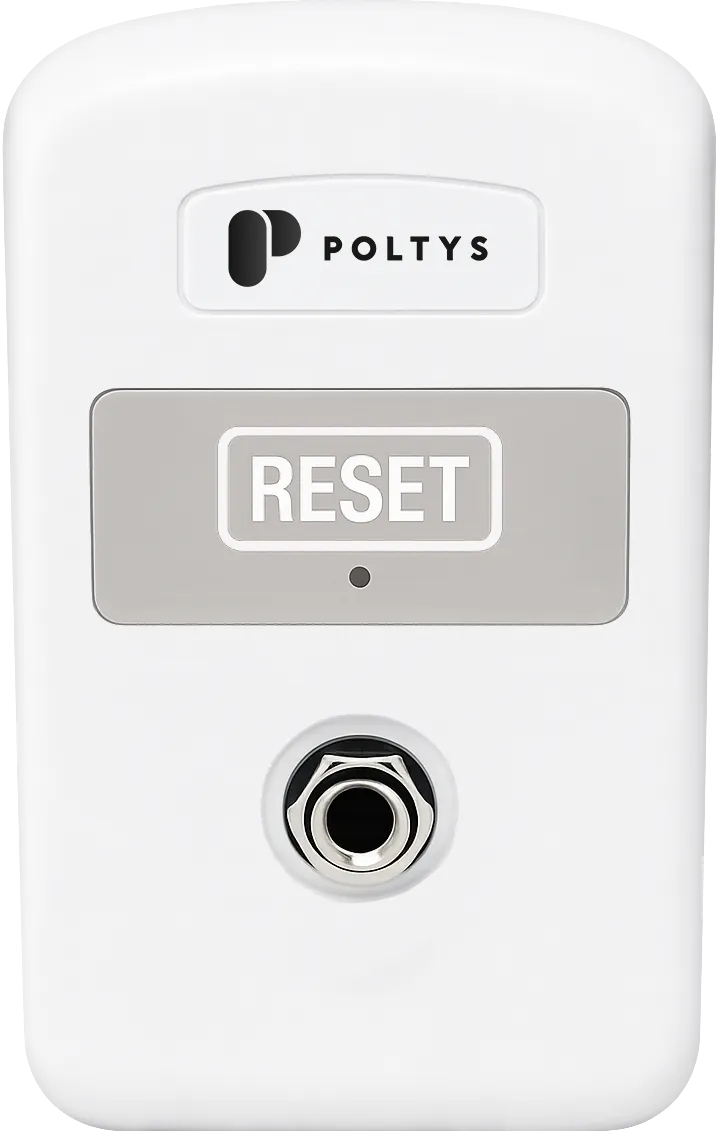
Call Cord Station
Single-input bedside station for a standard or specialty call cord. Battery-powered and wireless, so it installs without running cable in a retrofit or new build.
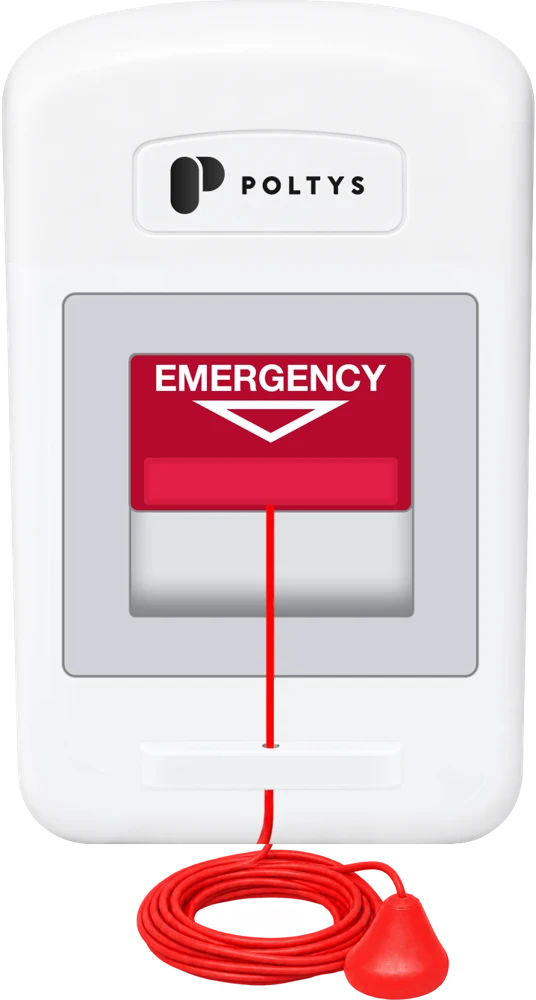
Pull Cord Station
Battery-powered wireless call point with a floor-length cord for washrooms, bathing areas, lounges and corridors, reachable from standing or from the floor.
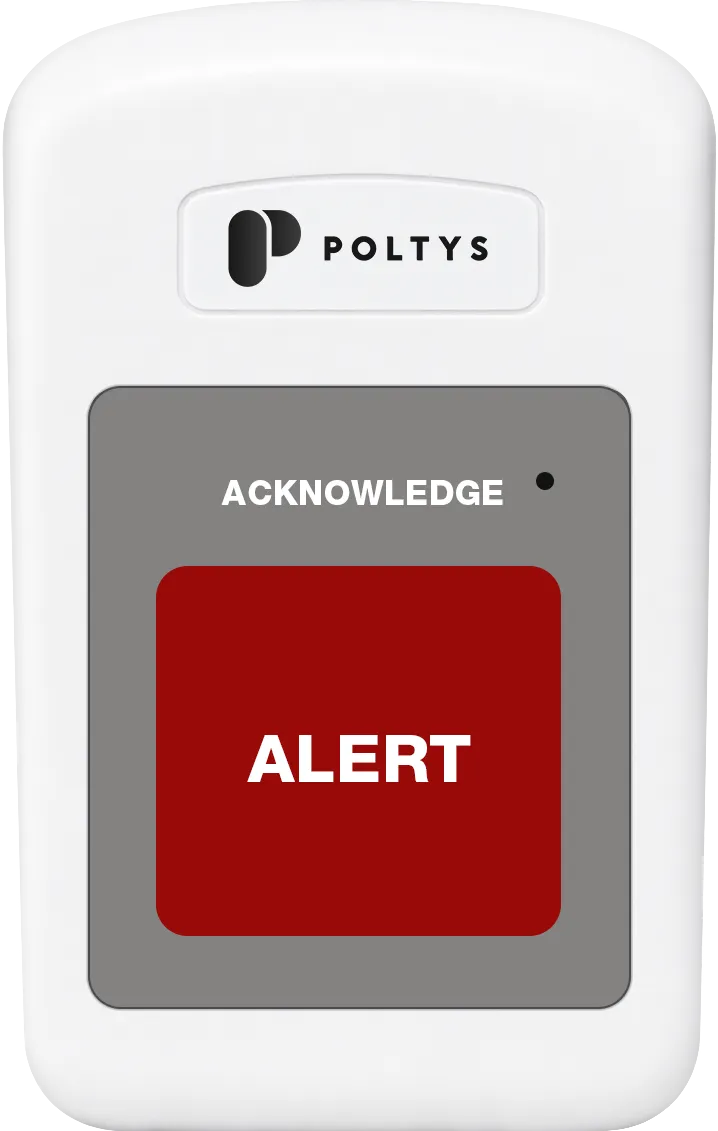
Wall Button Station
Battery-powered wireless emergency call point for common areas, with a large ALERT button and staff acknowledgement.
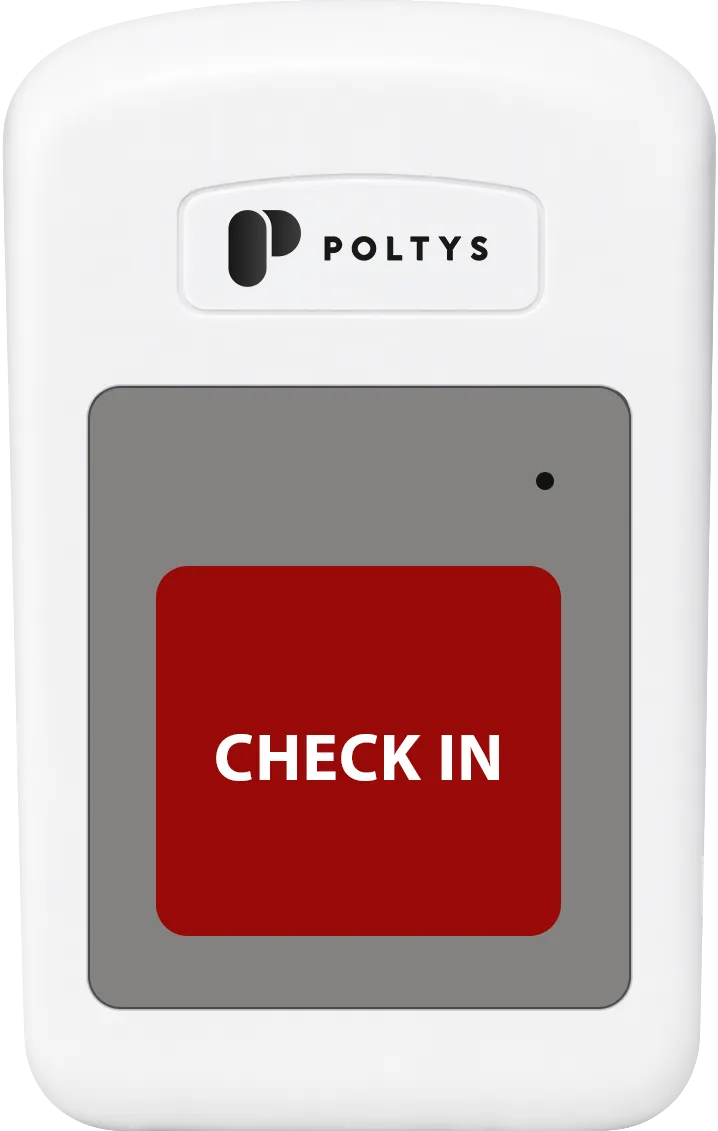
Resident Check-In Station
Battery-powered wireless station that lets a resident confirm they are well each day, and raises an event when one doesn't.
Doors and corridors
Transmitters that bring doors and existing contacts onto the platform, and a call light over the door.
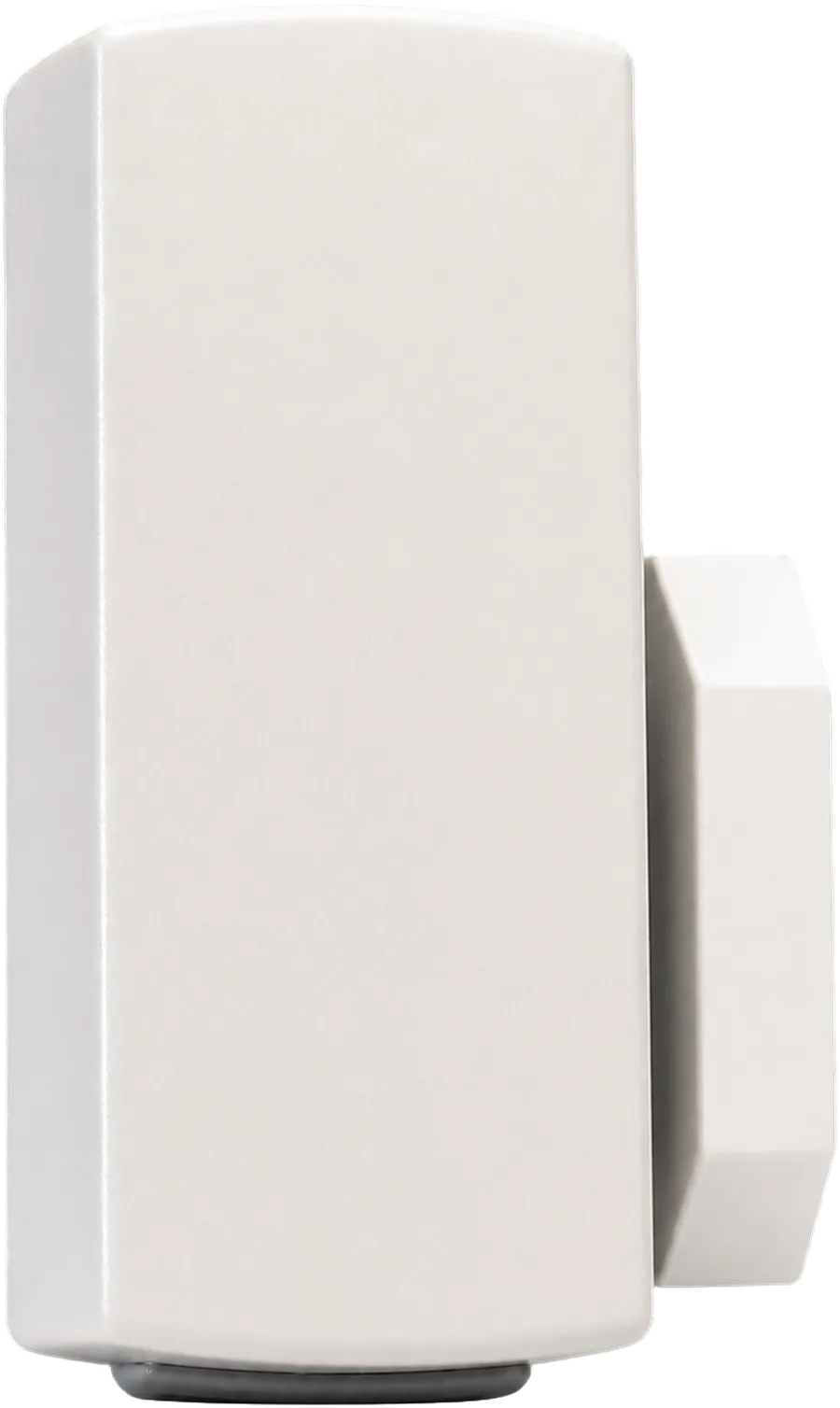
Door Transmitter
Comes with its own reed switch and magnet, so it fits any door, even one with no existing contact. Supervised, with a spare wired input.
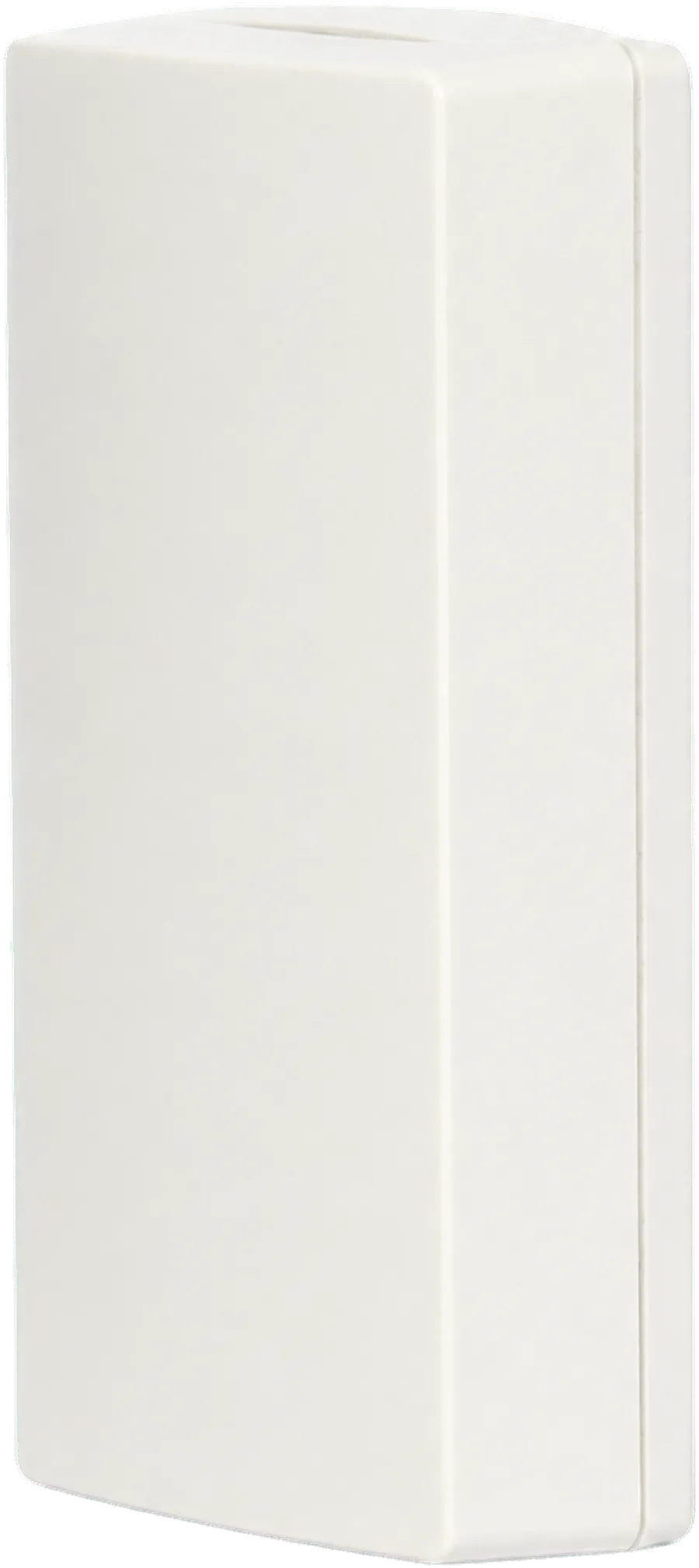
Universal Transmitter
Connects a door’s existing contact, or almost any other normally open or normally closed device, to DCC over supervised wireless.
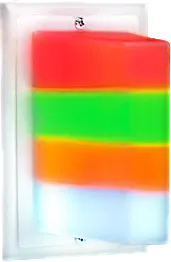
Call Light
Four-segment LED call light for at-a-glance status above resident rooms, washrooms and common areas, driven by the DCC server through an output channel.
WIRED SYSTEM
Wired system
Stations that daisy-chain on standard network cable. Wireless pendants and devices can be added to any wired system.
Room stations
The same Canadian-made hubs, on the wired network.
Communication Hub Station
Two-way voice call point with two call cord jacks and three auxiliary inputs. One PoE network cable carries power, voice and alarms. Designed and assembled in Canada.
See the Communication Hub
Hub Station
Two call cord jacks and three auxiliary inputs for bed, chair, door and smoke sensors, powered and connected over one PoE network cable. Designed and assembled in Canada.
Call points and signalling
Bedside and washroom stations and a dome light that daisy-chain on standard Cat5e/6, with power and data on one run.
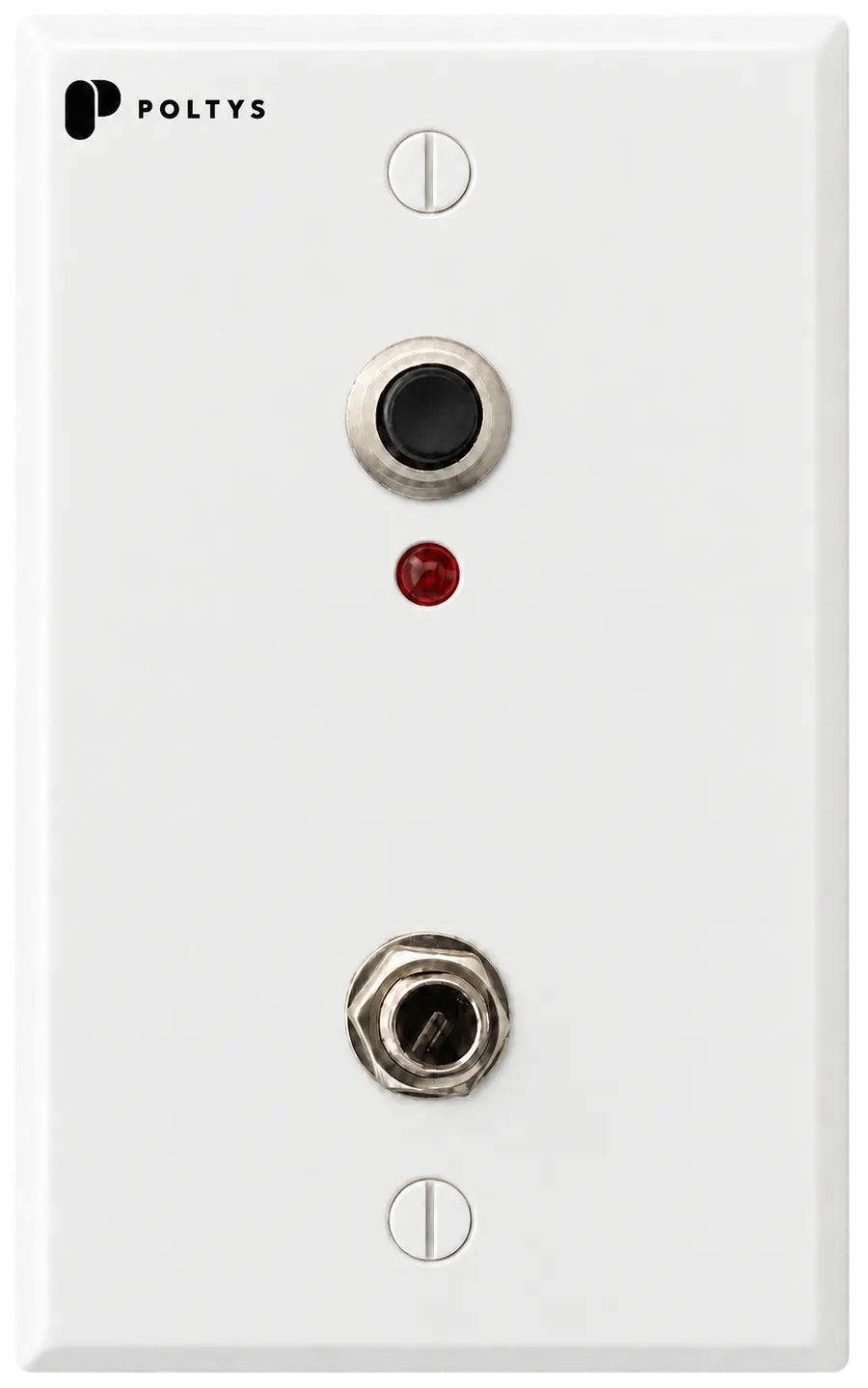
Call Cord Station
Single-input bedside station for a standard or specialty call cord. Staff clear the call at the bedside, not from a console down the hall.
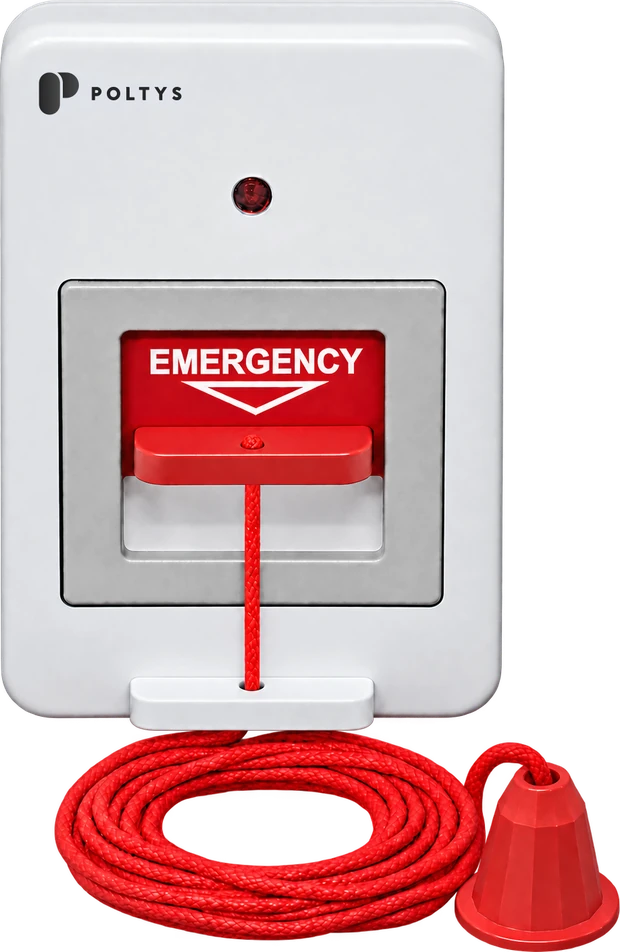
Pull Cord Station
Floor-length emergency pull cord for washrooms and bathing areas, so a resident who has fallen can still call.
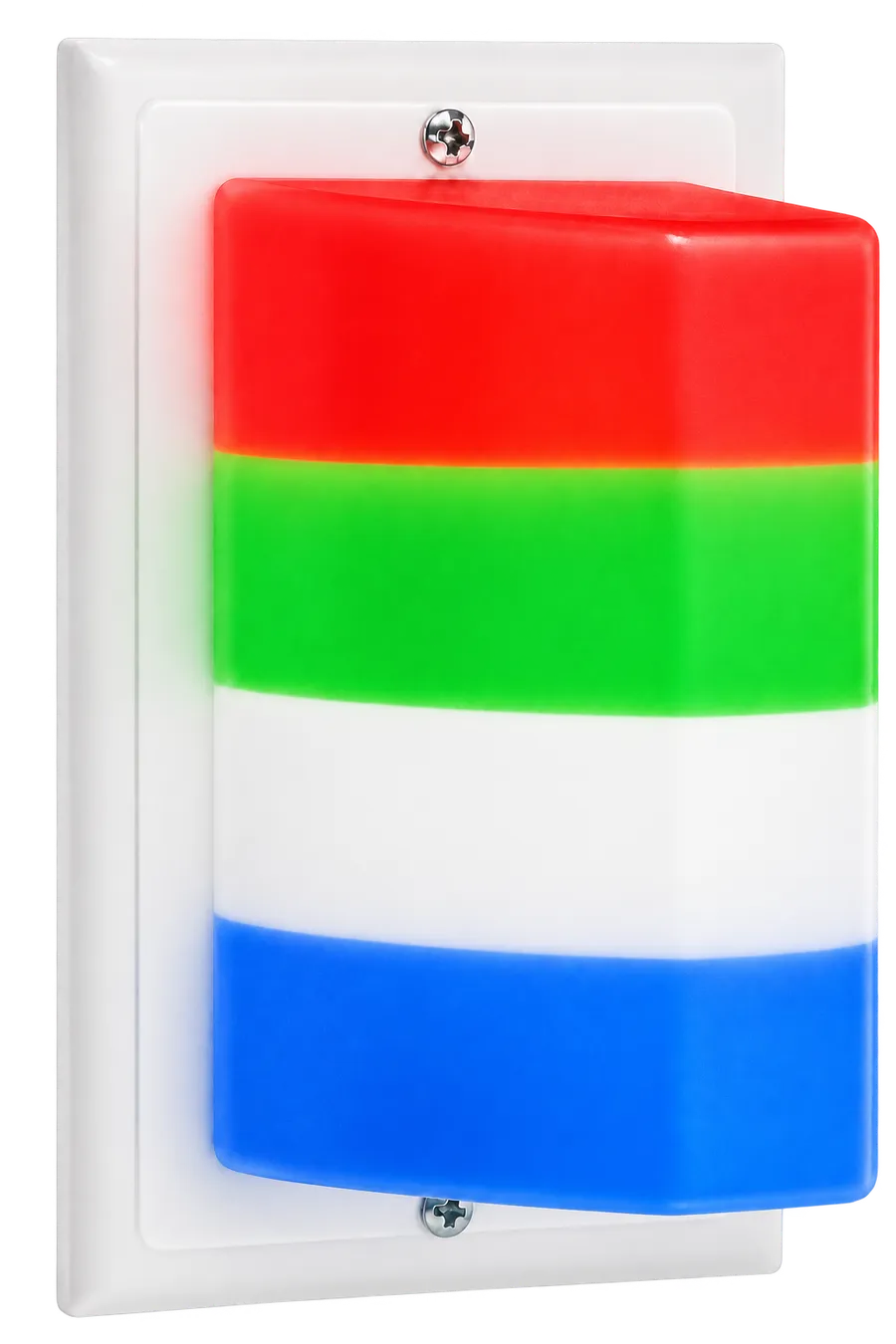
Dome Light
Four-segment LED dome light with a built-in buzzer, so calls are heard at the door as well as seen.
WORKS WITH ANY DCC SYSTEM
Works with any DCC system
Wearables, call cords, sensors and voice devices that work the same whether rooms are wired, wireless or both.
Resident pendants
A nurse call pendant stays with the resident, so they can request help within system coverage.
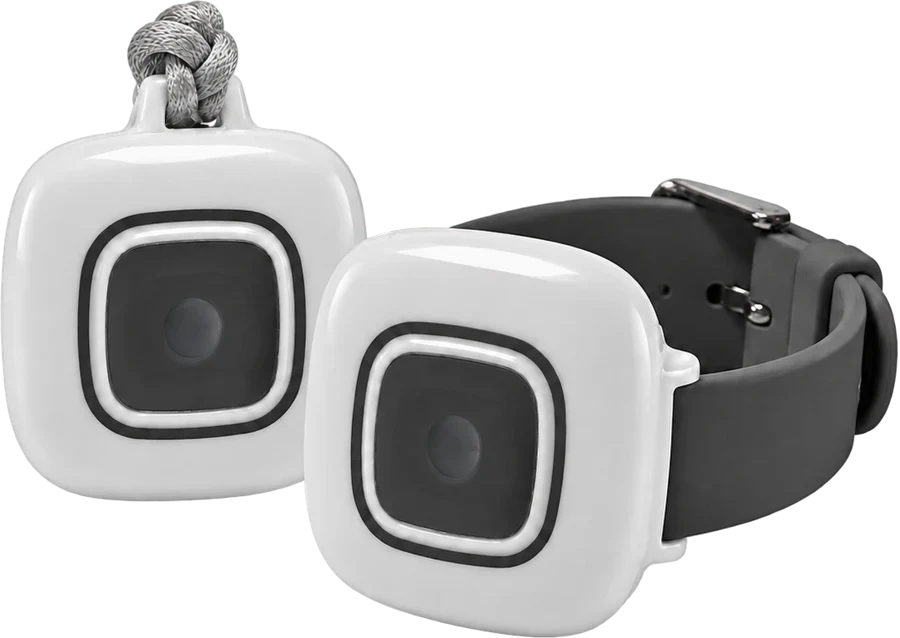
Waterproof Pendant
Resident-worn call button in neck lanyard or wristband form - waterproof, supervised, and always within reach.
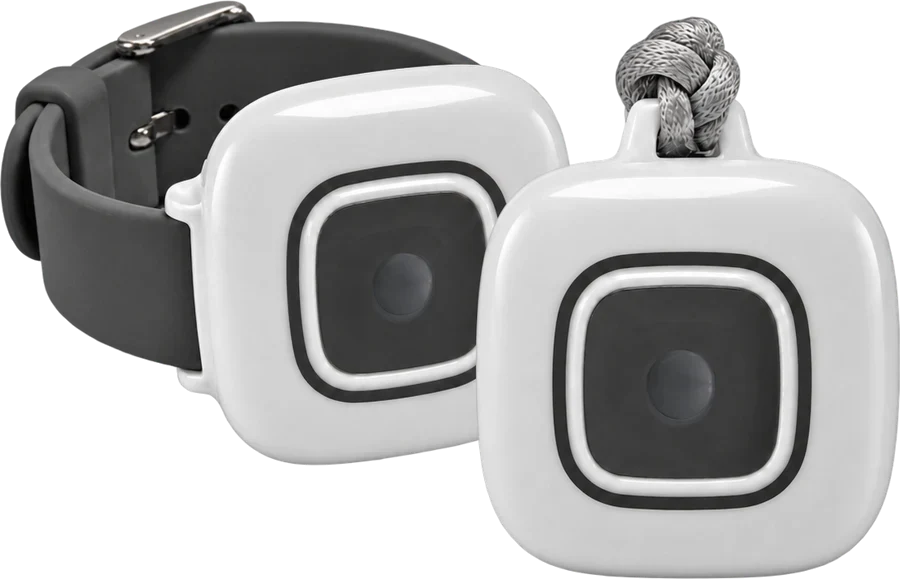
Advanced Location Pendant
Resident pendant that reports where the call came from, so staff go straight to the room instead of searching the floor.
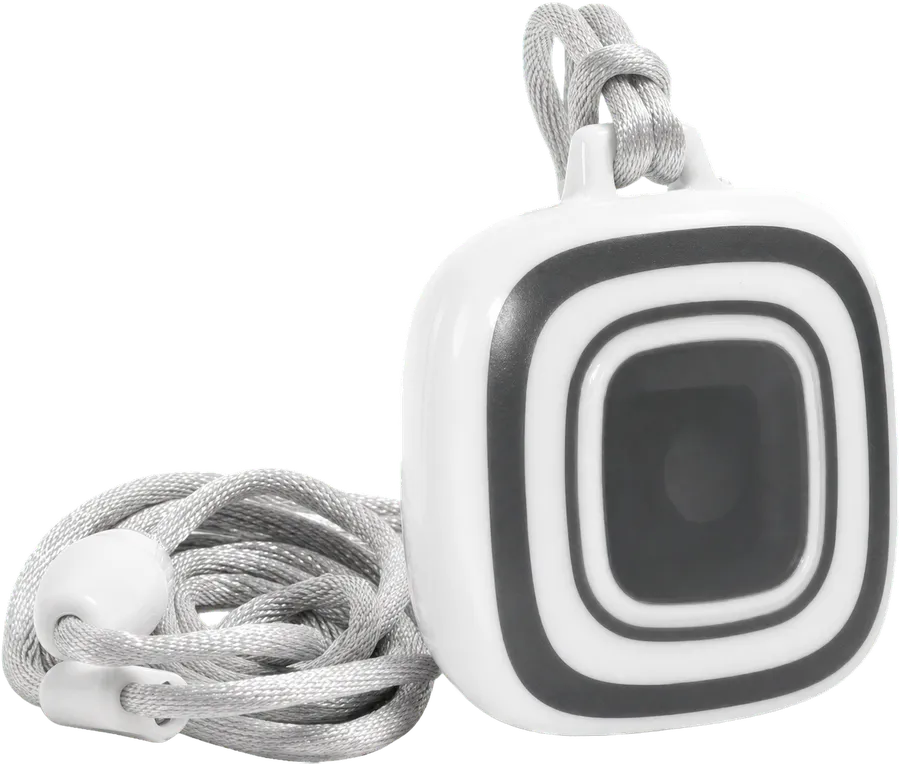
Fall Detection Pendant
Waterproof resident pendant that detects a fall on its own and reports it with room-level location.
Staff duress devices
Worn by staff, so help can be requested from anywhere on shift.
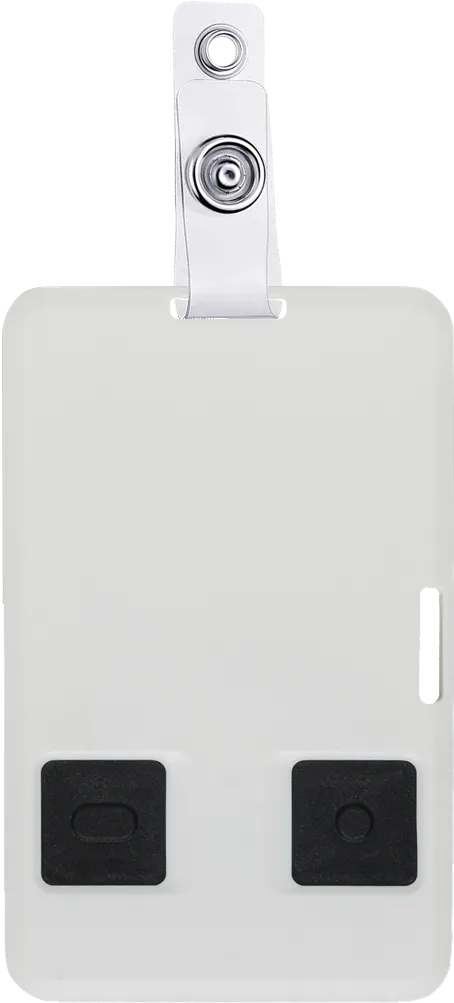
Staff Duress Badge
Discreet wearable duress badge giving staff three distinct alarms from two buttons, each reporting the wearer's location.
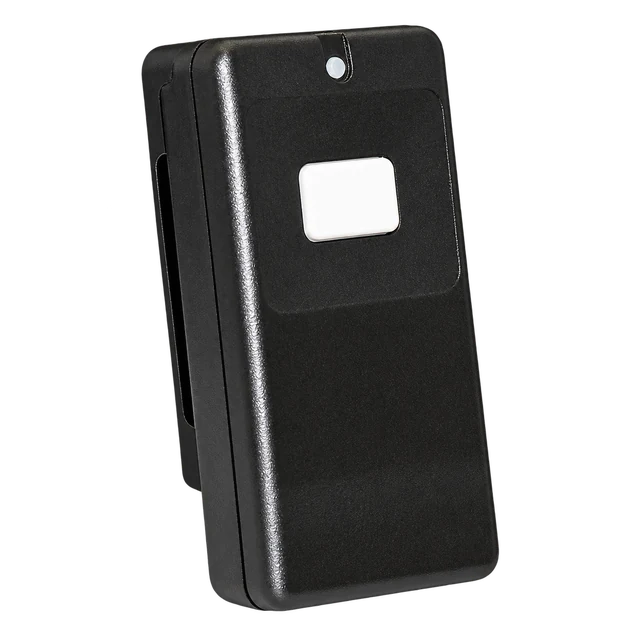
Single-Button Belt Clip Pendant
Compact wireless pendant worn at the waist, with a single button to request assistance and an LED that flashes when a signal is sent. Belt clip included.
Call cords
Start with the standard Call Cord, or choose a specialty cord for a resident who cannot reach or press a button. Every cord plugs into the same quarter-inch call cord jack on supported DCC stations, so the cord is matched to the resident and swapped at the jack as needs change, with no rewiring.
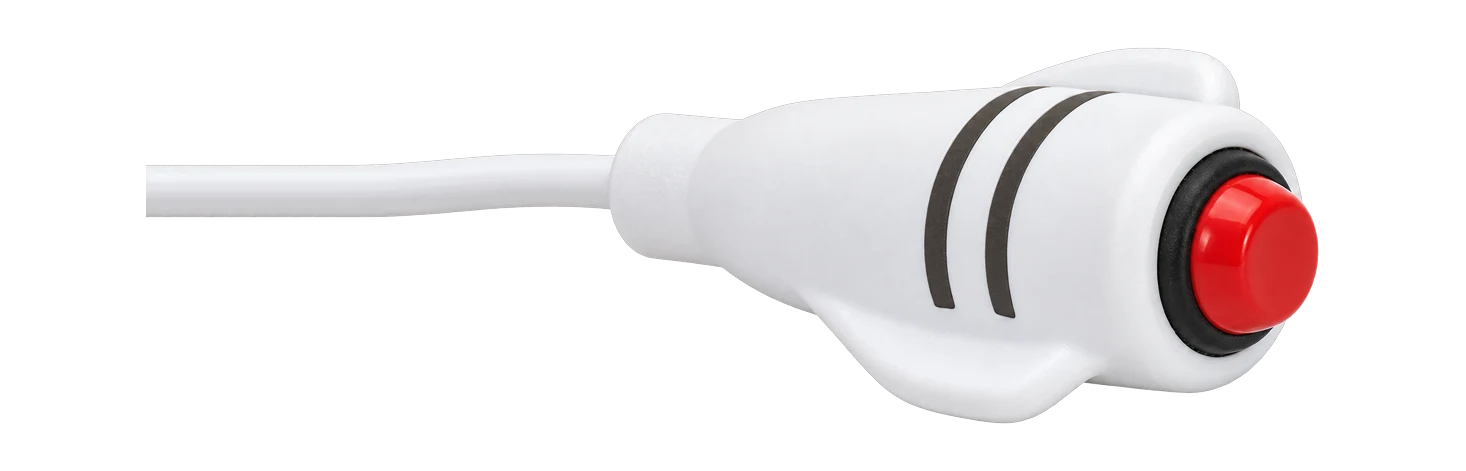
Call Cord
The standard bedside call cord: a red push button in an easy-grip white handle, with a quarter-inch plug that fits every DCC call cord jack.
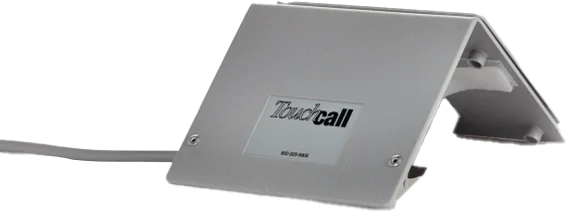
TouchCall Cord
A large, ultra-sensitive touch plate that calls with light contact, with no button to find. The tent-style design positions around the resident and suits hand, arm, knee, foot or chin activation.
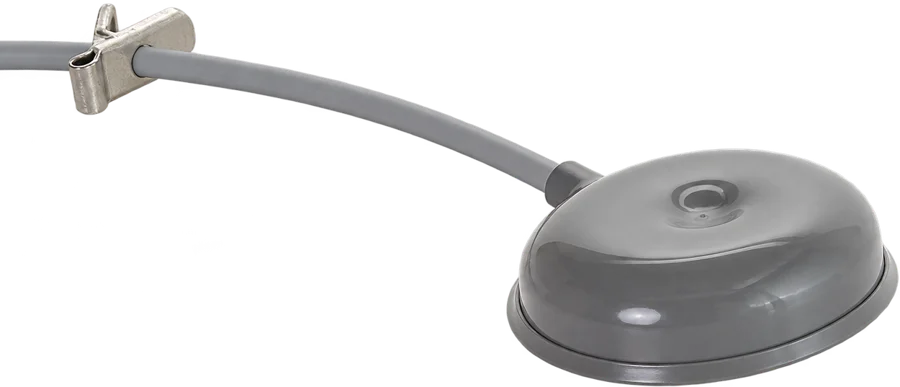
PadCall Cord
A broad, soft vinyl pad that calls with light pressure from the fingers, hand or elbow. Soft gripping feet keep it from sliding, including on bedding.
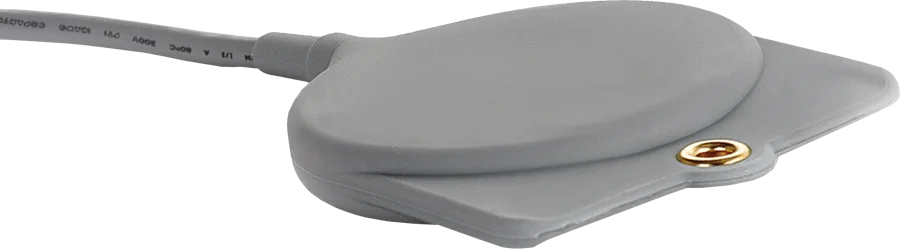
GeriCall Cord
A flat, low-effort pad for residents with limited strength or mobility. Calls with slight pressure from the hand, arm, leg or body, and can sit under the chin.
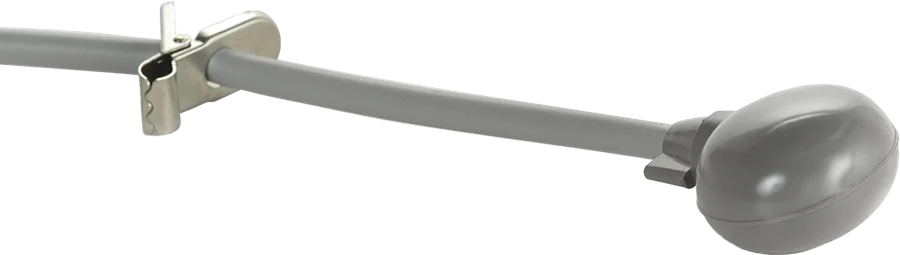
PressCall Cord
A soft, oval bulb that calls with a simple hand squeeze. Fits comfortably in the hand, with no button to locate.
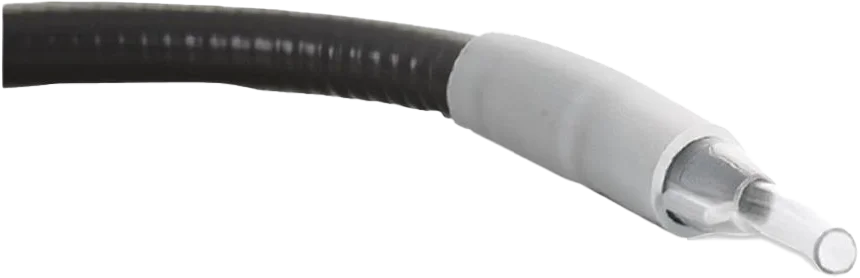
BreathCall Cord
Breath-activated calling for residents with little to no motor control. A flexible gooseneck holds the straw within reach; the straw and filter kit is single-patient use.
Not sure which cord fits? See how to match the cord to the resident. Position the cord where the resident’s contact point naturally rests, secure it within reach, and place a test call before leaving the room. Specialty call cords are resident-activated; they are not fall monitoring sensors.
Fall management
Bed, chair and floor sensor pads with a Fall Fighter monitor that notifies caregivers when a resident gets up and may need help. The wireless monitor sends alarms straight to DCC; the wired monitor plugs into the room’s station.
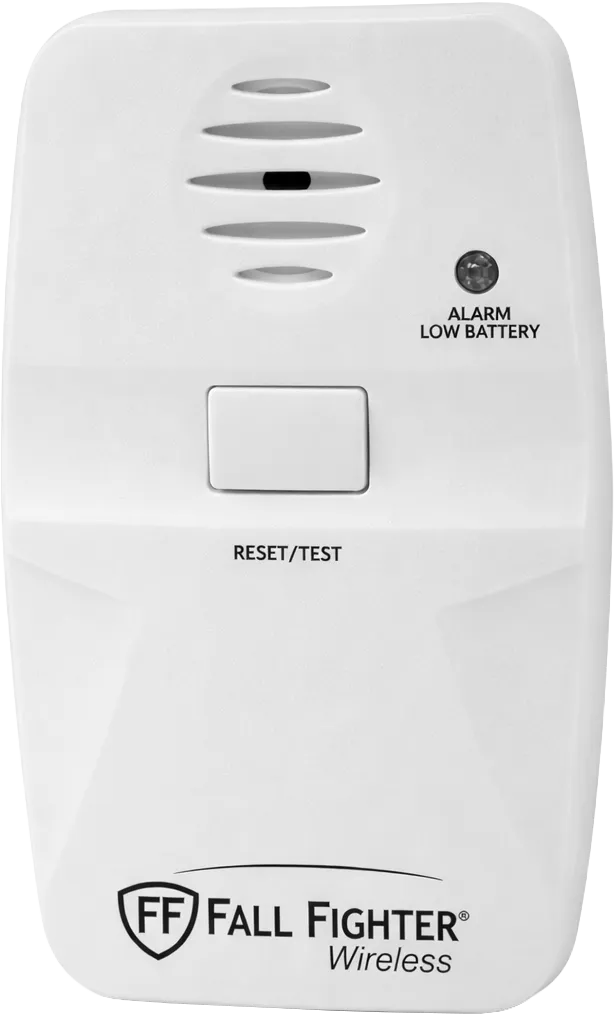
Fall Fighter Monitor
Wireless monitor for bed, chair and floor pads, with the alarm delivered to the caregiver, not just the room. Because it needs no cable to a wall station, it works at the bedside or on a wheelchair.
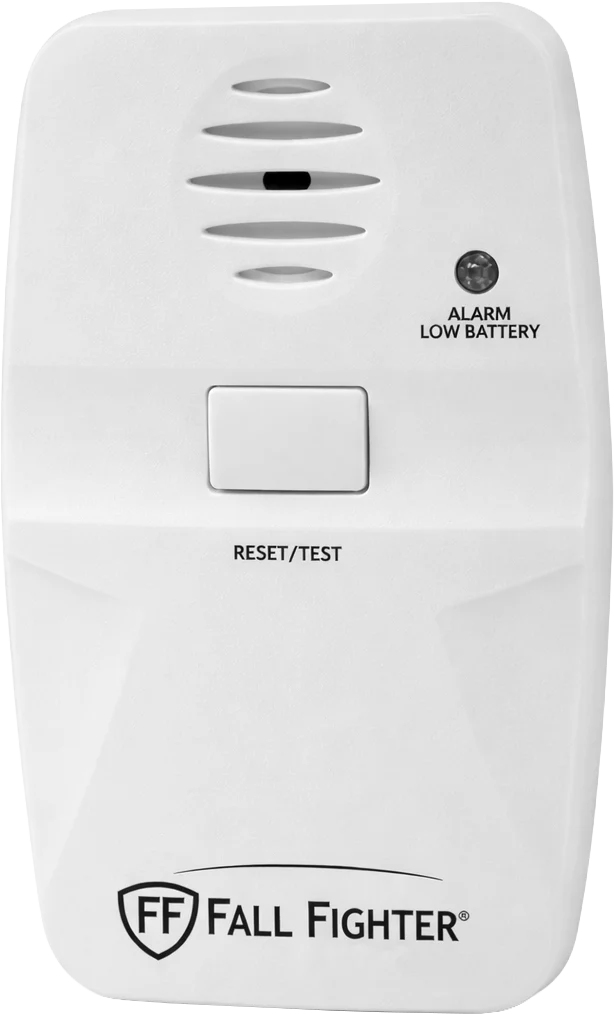
Fall Fighter Monitor
Plugs into the call cord jack on the room’s DCC station, so pad alarms travel through the station already there. With the local tone muted, staff are alerted, not the resident.
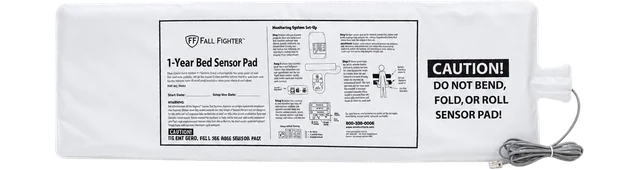
Bed Sensor Pad
Placed beneath the sheet at shoulder level to monitor when a resident leaves the bed. Connects to a compatible Fall Fighter monitor to alert caregivers.
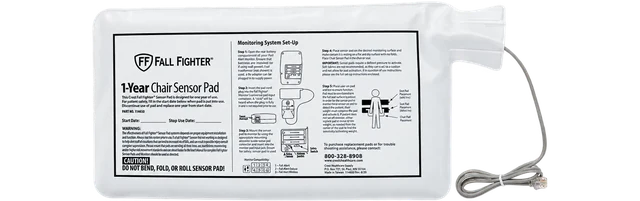
Chair Sensor Pad
Placed on the chair seat beneath the resident to monitor when they rise. Connects to a compatible Fall Fighter monitor to alert caregivers.
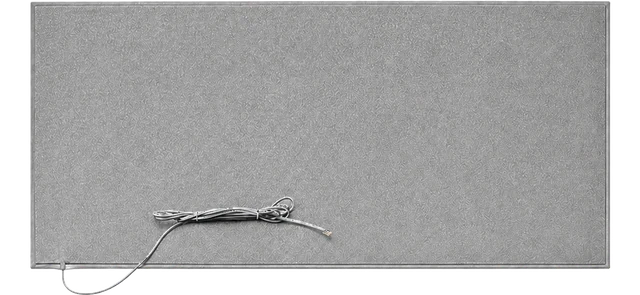
Floor Sensor Pad
Placed beside the bed on the usual exit side to detect a resident stepping onto the mat. Connects to a compatible Fall Fighter monitor to alert caregivers.
Contactless radar sensors
Radar monitoring for residents who cannot or will not use a call button. Nothing to wear, nothing to charge, and no camera: the sensors report motion and vital signs, never images, so they suit bedrooms and washrooms and work in the dark.
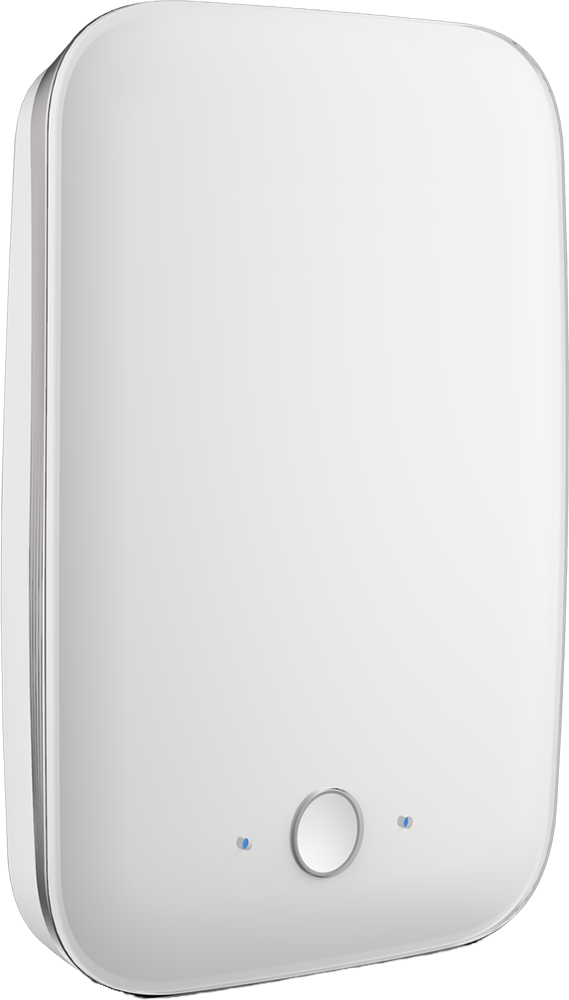
Contactless Fall Safety Monitor
Detects a fall anywhere in its field of view and raises the alarm automatically, with nothing for the resident to wear, charge or press. One corner-mounted unit covers a resident room day or night, names the room with every alarm and shows staff whether someone is there. Alarms are handled by your on-site DCC server, with no cloud subscription.
Learn more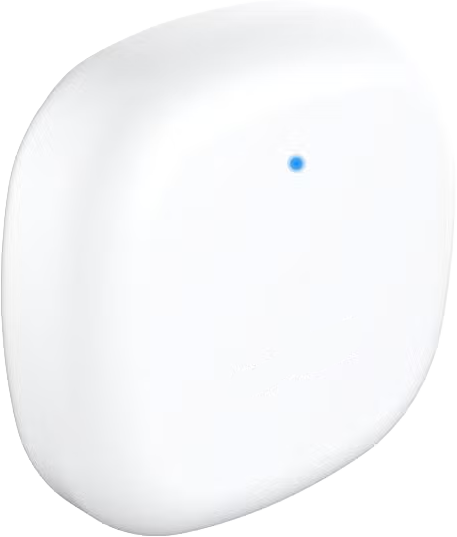
Contactless Sleep Monitor
Mounted above the headboard, it tracks bed presence, heart rate and breathing overnight. Staff are alerted when a resident is out of bed too long, up too often at night, or when vitals fall outside the ranges set for your site. Alerts are evaluated on your on-site DCC server, with no cloud subscription.
Learn moreWander management
Door and perimeter protection for residents at risk of leaving unaccompanied.
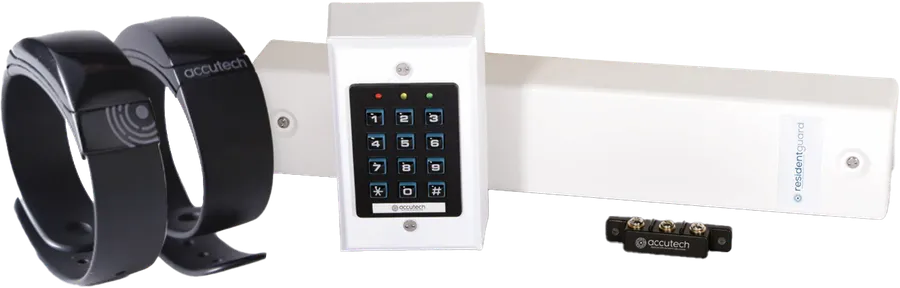
Accutech ResidentGuard
Door and perimeter protection for memory care and long-term care residents, integrated with Direct Care Connect DCC™.
Message boards and pagers
Put every call in front of staff, on the wall and in the pocket. Boards and pagers receive the same wireless alert, so the room on the wall always matches the one on the pager.
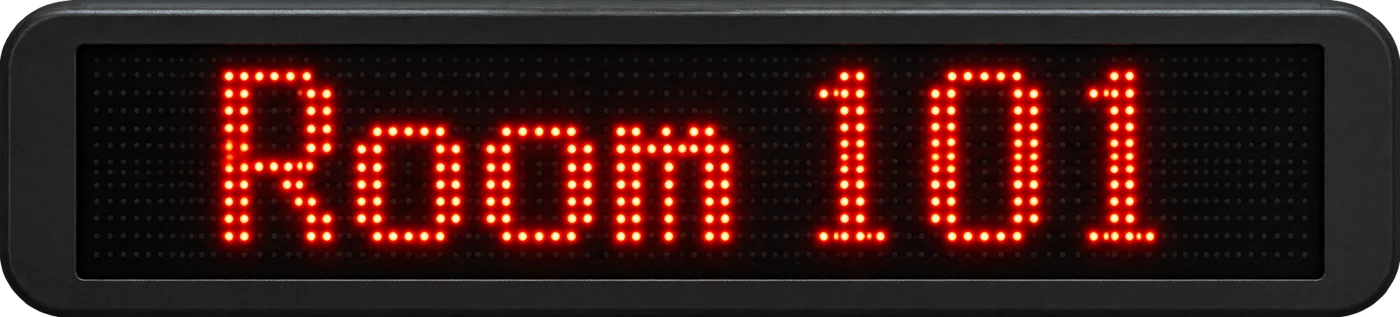
24-inch Message Board
Red LED message board that shows the room and call type in large characters staff can read across the room, or two lines with the time and date. Needs only a wall outlet: alerts arrive wirelessly, with no cable back to the nurse call system.

48-inch Message Board
Twice the width for long corridors, dining rooms and busy nurse stations, with room to spell out the full location and call type on one line.
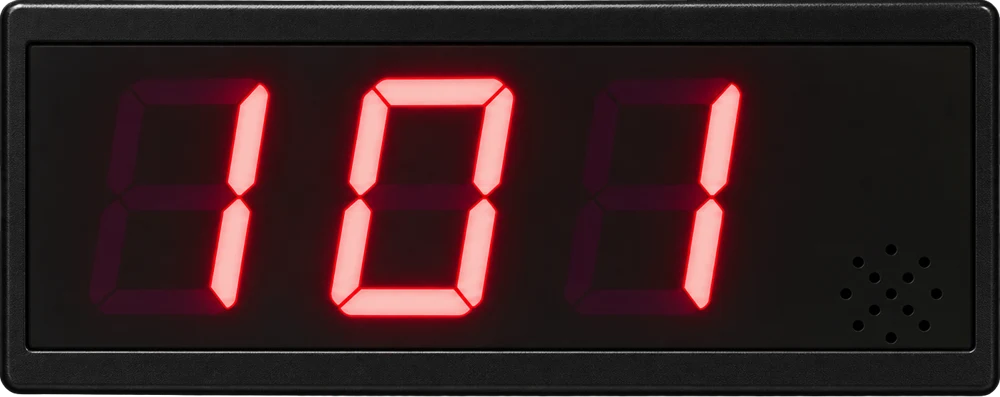
3-Digit Message Board
Large red digits show the calling room number, with an audible alert, where a number is all staff need. Plugs into a standard outlet and mounts on a wall or ceiling.
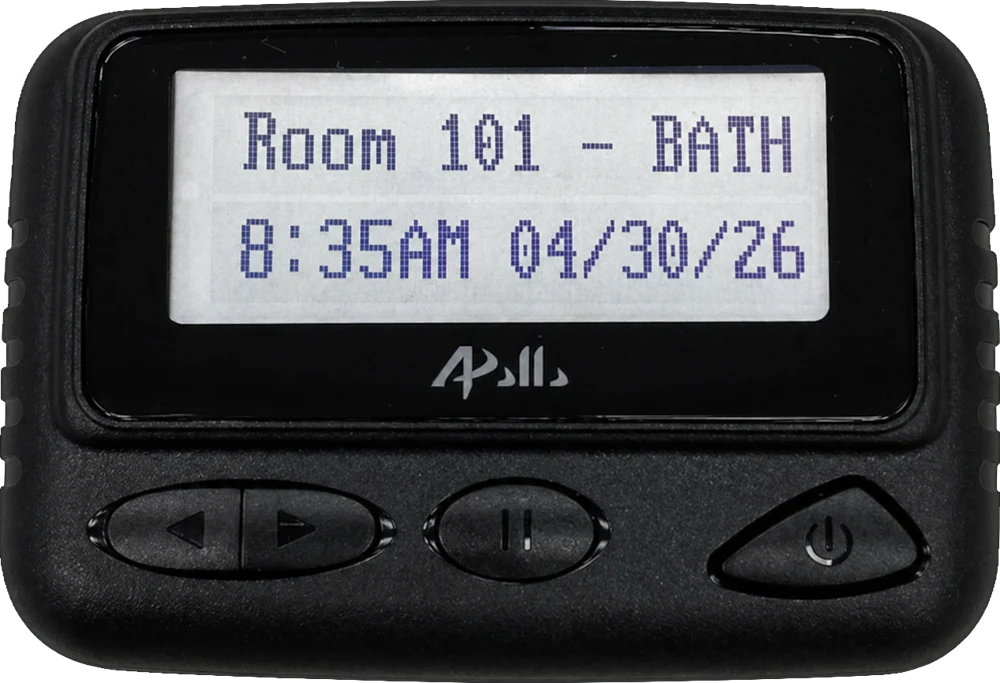
Alphanumeric Pager
Pocket pager that shows the room, call type and time of every alert, with a tone, melody or vibrate. Staff follow their own wing plus facility-wide calls, and the last 16 alerts stay in memory, each time-stamped.
Voice and IP-PBX
Voice infrastructure and alert-receiving devices for DCC integration.
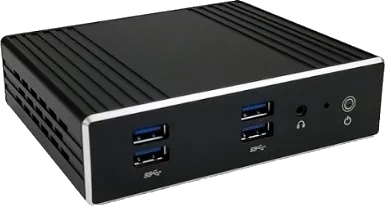
Poltys IP-PBX
The voice engine behind DCC. Handles staff calling, transfers, conferencing, paging and intercom, carries two-way voice with residents, and can support resident telephone service on the same infrastructure. Nurse call operation stays independent of it.
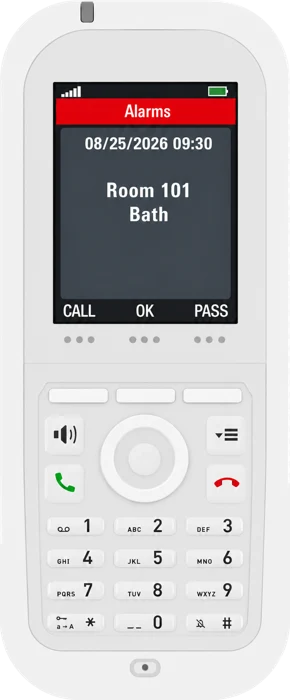
Cordless handsets
Supported Snom DECT handsets receive DCC alerts and let caregivers acknowledge from the handset. Official integration developed with Snom using its API.
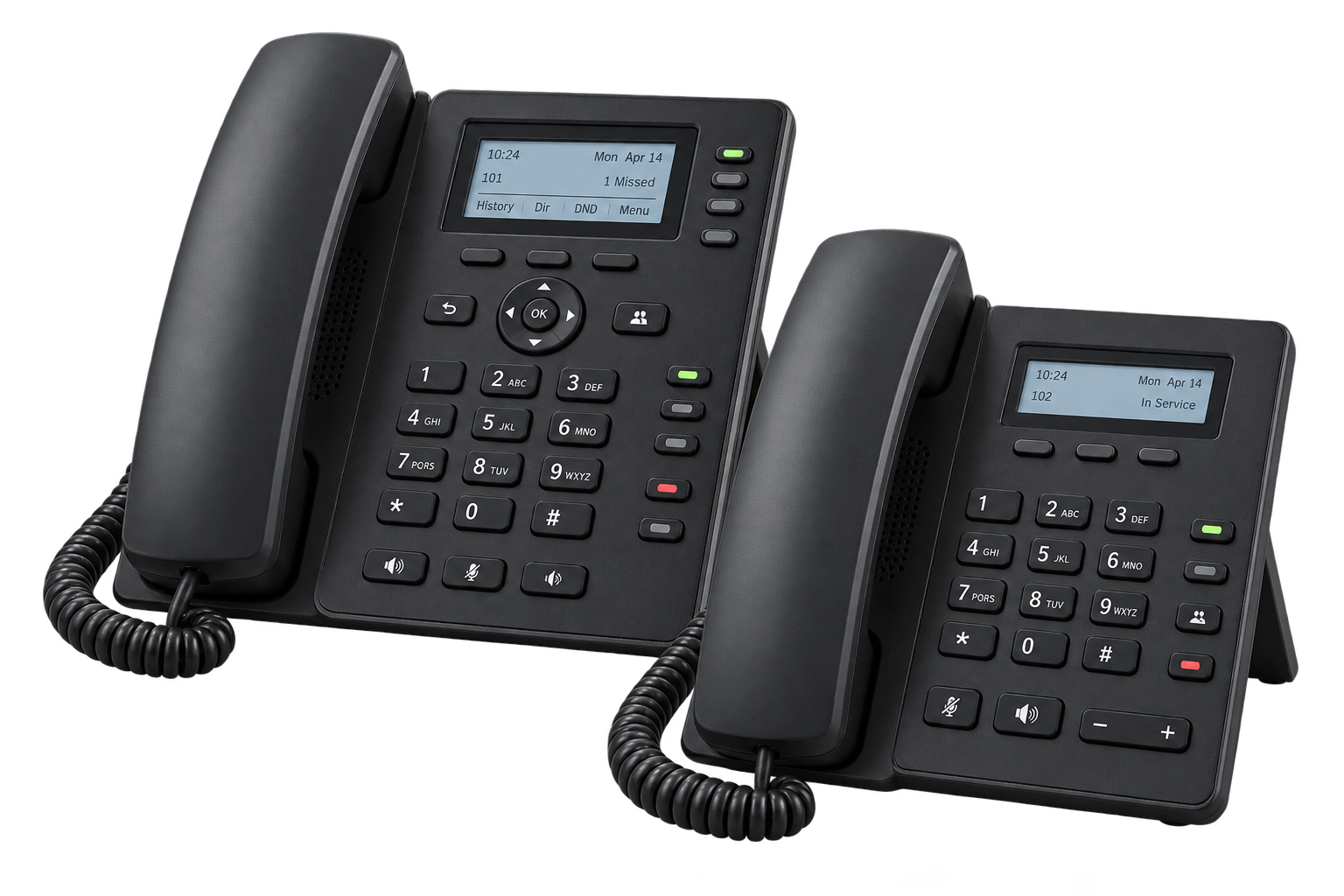
SIP desk phones
Everyday desk phones for nurse stations, front desks and offices, handling regular calls, transfers and paging like any office phone. They also receive resident alerts with room and location on screen, so staff can answer, speak with the resident and clear the call without picking up a second device.
QUOTE PATH
Plan around your community and your current system
Tell us what you have today, and Poltys Canada will help evaluate the path that fits.
Contact UsNEXT STEP
See DCC in your community
Review your current system, your deployment options, and the budgetary path that fits your community.